- Winter Safety
- New Year's Eve Safety
- Spring Safety
- Summer Safety
- July 4th Safety
- Halloween Safety
- Thanksgiving Safety
- Christmas Safety
Winter Safety
- Keep your cat inside. Outdoors, felines can freeze, become lost or be stolen, injured or killed. Cats who are allowed to stray are exposed to infectious diseases, including rabies, from other cats, dogs and wildlife.
- During the winter, outdoor cats sometimes sleep under the hoods of cars to keep warm. When the motor is started, the cat can be injured or killed by the fan belt. If there are outdoor cats in your area, bang loudly on the car hood before starting the engine to give the cat a chance to escape.
- Never let your dog off the leash on snow or ice, especially during a snowstorm. Dogs can lose their scent and easily become lost. More dogs are lost during the winter than during any other season, so make sure yours always wears ID tags.
- Thoroughly wipe off your dog's legs and stomach when he comes in out of the sleet, snow or ice. It is also important to check his paws after he has been outdoors. He can ingest salt, antifreeze or other potentially dangerous chemicals while licking his paws, and his paw pads may also bleed from snow or encrusted ice.
- Never shave your dog down to the skin in winter, as a longer coat will provide more warmth. When you bathe your dog in the colder months, be sure to completely dry him before taking him out for a walk. Consider getting your short-coated dog a coat or sweater. For many dogs, a sweater with a high collar or turtleneck with coverage from the base of the tail to the belly is regulation winter wear.
- Never leave your dog or cat alone in a car during cold weather. A car can act as a refrigerator in the winter, holding in the cold and causing the animal to freeze to death.
- Puppies do not tolerate the cold as well as adult dogs, and may be difficult to housebreak during the winter. If your dog is sensitive to the cold due to age, illness or breed type, take him outdoors only to relieve himself.
- If your dog spends a lot of time engaged in outdoor activities, increase his supply of food, particularly protein, to keep him and his fur in optimal shape.
- Antifreeze is a lethal poison for dogs and cats. Be sure to thoroughly clean up any spills from your vehicle, and consider using products that contain propylene glycol rather than ethylene glycol. Visit the ASPCA Animal Poison Control Center for more information.
- Make sure your companion animal has a warm place to sleep, off the floor and away from all drafts. A cozy dog or cat bed with a warm blanket or pillow is perfect.
New Year's Eve Safety
- Be observant of your pet's response to loud noises. Thunderstorms and fireworks are known causes for pet anxiety, but celebration party favors and popping champagne corks can be just as traumatizing. If you are hosting a party, make sure your pets are placed in a comfortable area that is separate from the activities. Make sure they have plenty of water and are secure. When possible, refrain from keeping them outside, as fireworks and other neighbors celebrating can lead to the same ruckus and worry.
- Always keep your pet's tags on his collar. In the case he does get spooked and bolt for an open door or gate, an ID tag will be imperative to getting him home safely.
- Beware of alcohol! Many pets can be drawn to glasses of beer or liquor that have been left behind after the celebration is over. Consumption of alcohol can be highly dangerous for animals, and even deadly. Make sure to thoroughly clean up the area before you allow your pets to enter. Always keep a close eye on them, and never give them any alcohol as a treat or joke.
- Be aware of party decorations. Balloons, streamers, party hats or confetti can be unhealthy for an animal if ingested. While decorating for your party, keep the animals in a separate area where they do not have access to the decorations. If they do get into them, consult a veterinarian immediately.
Spring Safety
- As with other holidays and celebrations, keeping chocolate away from pets is a must. Chocolate can potentially produce clinical effects ranging from vomiting and diarrhea to panting, excessive thirst and urination, hyperactivity, abnormal heart rhythm, tremors, seizures and even death in severe cases. White chocolate has the lowest toxic methylxanthine content, while baking chocolate contains the highest. While white chocolate may not have the same potential as darker forms to cause a methylxanthine poisoning, the high fat content of lighter chocolates could still lead to vomiting and diarrhea, as well as the possible development of life-threatening pancreatitis.
- Keep an eye out for spring flower mixes and bouquets. Many of those plants are poisonous to all types of animals, including reptiles. Visit the ASPCA Animal Poison Control Center for more information.
- Beware of plastic grass for stuffing Easter baskets. This filling is not digestible and can cause intestinal blockage if consumed by your pets.
- If you create an Easter egg hunt in your yard, make sure to collect all the hard-boiled eggs from their hiding places. If left outside, the egg could rot and then be eaten by your pet. To guarantee this doesn't happen, substitute real eggs for plastic ones, or draw a map of where you've hidden them all so you can double check they've been found.
Summer Safety
- Just like humans, your pet can suffer from heat exhaustion and heat stroke. Make sure they have plenty of water to drink, an abundance of shade, and limit their time outside during the hottest parts of the day. Heat can also affect the paws of your pets, so limit walks to early morning or late evening and always test the concrete with your own bare feet first.
- Pets can get sunburned too! Depending on your pet's coloring, they may need sunscreen on their noses or the tips of their ears. Please consult Avery Animal Hospital on what type of sunscreen is safe for your pet and only use sunscreens created specifically for animals.
- During the summer, outbreaks of fleas and ticks can increase. Please use only flea and tick treatments that have been recommended to you by Avery Animal Hospital. This is a medical treatment and the quality of the product used is very important.
- If you have any travel plans with your pet during the summer, make sure to research and prepare. Airlines may have travel restrictions based on the temperature of the cargo department. Visit the Humane Society of the United States website for information on traveling with your pet.
- If you or your neighbors have a pool, be careful to monitor access to it. Make sure your pets are not left unsupervised around water. If playtime includes the pool, make sure to remove all toys or balls from the water afterward so your animal doesn't try to retrieve them when you are not around.
- Never leave your pet in the car. Dogs and cats can't perspire and can only dispel heat by panting and through the pads of their feet. Pets left in hot cars even briefly can suffer from heat exhaustion, heat stroke, brain damage, and can even die. If you are running errands, leave your pets at home. Animals should also never ride in the back of trucks.
July 4th Safety
- Make sure to keep your pets away from grills, sparklers, fireworks and citronella candles. Not only does the noise of fireworks scare them, but accidents can happen. Please keep your animals inside, away from the festivities.
- Do not use any sunscreens or other summer sprays on your pets that are not made especially for them. If you have a high presence of insects bothering your pets, or they will be out in the sun, please consult Avery Animal Hospital for insect repellents and sunscreens that are safe for animals.
- Do not place glow ropes or other festive party favors on your pets. If ingested, these items could cause severe health problems or even death.
- Do not take your pet with you to large celebrations. Excessive noise, fireworks and unsupervised food or drink can be either overwhelming or unhealthy for your animal. Leave them at home in a peaceful and secure area.
- Always keep your pet's collar with an ID tag on him. With fireworks comes anxiety, sometimes resulting in escape attempts or bolting.
- Your pets will do better if they're not left home alone during fireworks events. Signs of anxiety can include pacing, trembling, panting, drooling, attention-seeking, hiding, and bolting. Nervous pets tend to drink more water, so keep more available than usual.
- Bring outside pets inside so they can't bolt. Keep your cats securely inside, and if your dog needs a potty break during the fireworks, take him outside on a leash, even in a fenced yard.
- Talk to your veterinarian ahead of time about anxiety remedies. Options range from drug-free solutions like pheromone sprays, pressure wraps (such as Thundershirts), and calming chews, to short-term sedatives or prescription medications for more severely anxious pets.
Halloween Safety
- Keep chocolate away from pets. Chocolate can produce effects ranging from vomiting and diarrhea to seizures and even death in severe cases. Candy made with artificial sweeteners, especially Xylitol, is also toxic to dogs. If you think your dog has eaten something toxic, contact your veterinarian or the ASPCA Animal Poison Control Center at 1-888-426-4435.
- If you decide to dress up your pet, make sure they aren't near an open flame or fireplace, watch for tripping and choking hazards, ensure they can see easily and are comfortable, and never leave a costumed animal unsupervised.
- Trick-or-treaters mean open doors. Keep your pets away from doors and make sure they are wearing their collars with current tags at all times.
- Watch for foil and plastic candy wrappers — pets could eat them and choke or get sick.
- Halloween events can be stressful for pets. Keep them inside and comfortable. Some children may tease animals through gates or fences while wearing masks.
- Watch open flames around wagging tails. A powerful tail can knock over a candle or jack-o-lantern.
- Keep all electrical wires, cords and decorations out of the reach of your pets.
- Leave your pets at home while trick-or-treating. Animals can be easily startled by costumes and loud noises.
Thanksgiving Safety
- A diet high in fat can be extremely harmful to your pet's health. Even a one-time change in diet can lead to digestive issues or life-threatening pancreatitis. Feed your pet his normal food and refrain from overindulging him with table scraps.
- Keep food covered and away from table edges, or keep your pet out of the dining room during dinner to eliminate temptation.
- Keep trash cans out of reach of your pets, or take the trash out right after you're done with it. Even in a vegetarian household, onions and chocolate can be just as dangerous.
- Don't give your pets animal bones. They are hollow and splinter easily, creating sharp pieces that can choke a dog or block and tear the intestines.
- Keep your pet calm while guests are visiting. Consider giving them their own space away from people, and take them for a long walk before guests arrive to burn off energy.
- Keep pets out of the kitchen while cooking to avoid accidents around open oven doors or hot dishes.
- Leave your pets at home when attending holiday parades and festivities. Large crowds, floats and balloons can send your dog into an anxious or aggressive state.
- Make sure your pets are wearing their collars with tags in case someone forgets to shut the door.
Christmas Safety
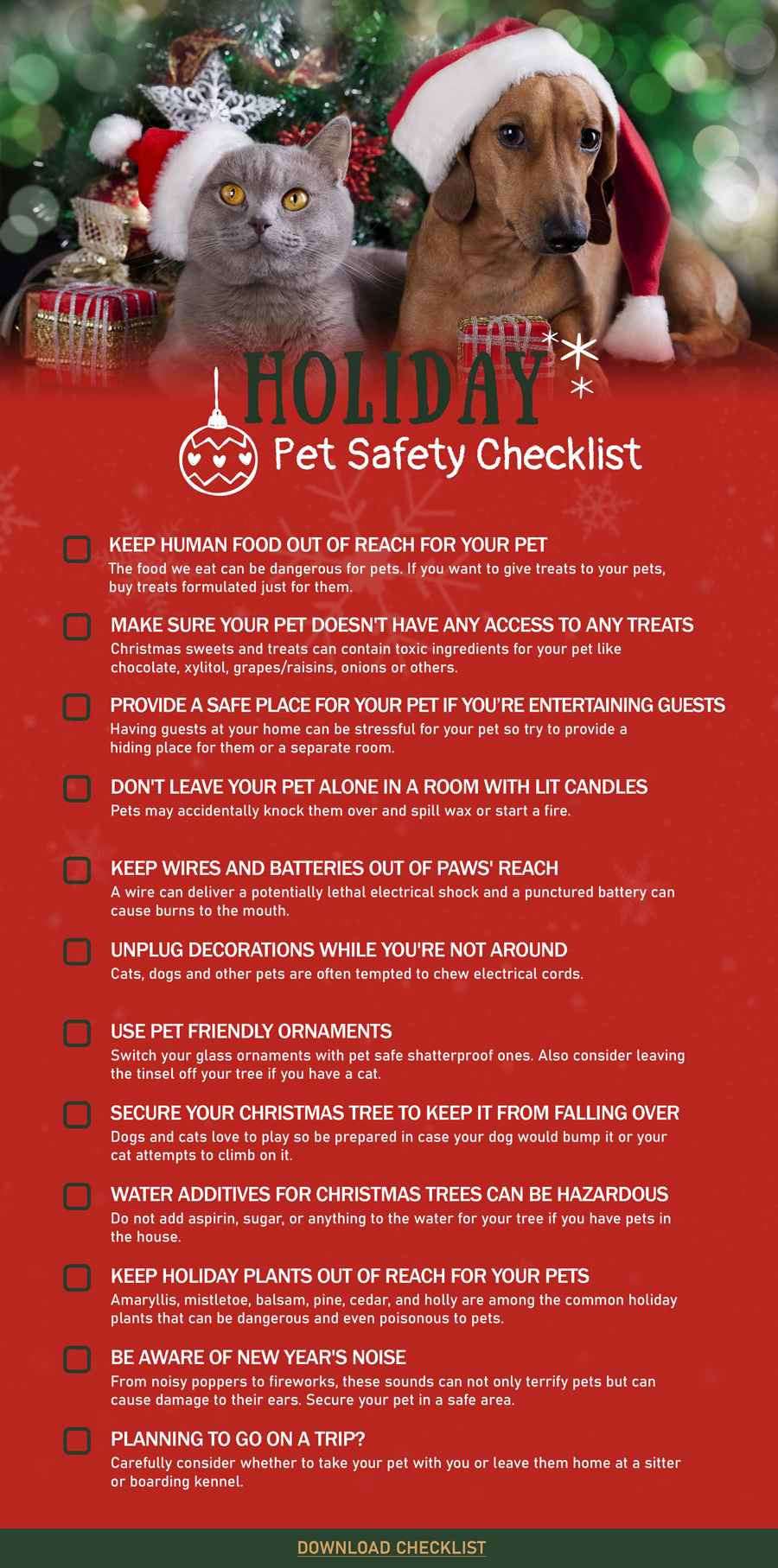
- Loud noises or unfamiliar faces may spook your pet. Designate a quiet and secure room away from the crowd.
- Crating or confining your pet when you are unable to be with him will eliminate behavior problems when you are not there.
- Some pets get upset by major schedule changes. Trying to maintain normal feeding, exercise, and sleeping patterns may help reduce stress for all.
- More pets are lost during winter than any other season. Doors will be opened more often during the holidays, so make sure your pet is microchipped and/or has a current tag on his collar.
- Consider adding new or extra enrichment toys to redirect your pet's attention away from Christmas trees or decorations.